
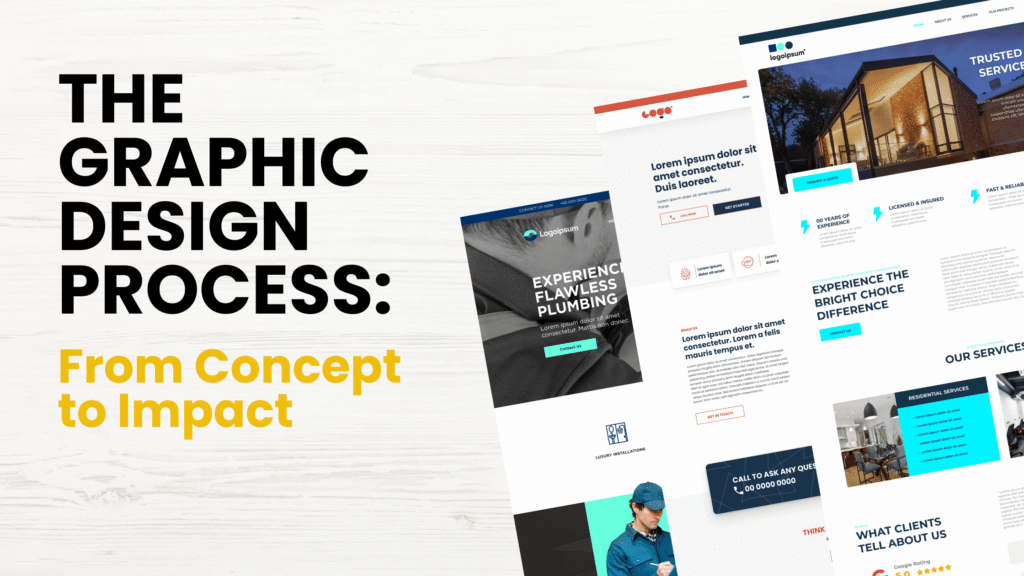
Graphic design is much more than arranging visuals on a screen or page — it’s a strategic process that transforms ideas into compelling visual communication. Whether you’re crafting a brand identity, social media visuals, or website graphics, a clear process ensures your work resonates with the audience and meets project goals.
1. Understand the Project & Goals
Every successful design starts with clarity. Before jumping into creating visuals, define what the design needs to achieve. This means:
- Identifying the purpose of the work (e.g., branding, promotional, informational)
- Understanding the target audience’s expectations and behaviors
- Setting measurable goals (such as increasing engagement, conveying a message, or boosting conversions)
A solid creative brief brings everyone on the same page and becomes the reference point throughout the project
2. In-Depth Research & Inspiration
Great design is grounded in insight. Research helps uncover the context that should inform your visuals:
- Study competitors and design trends in the industry
- Explore effective colour palettes, layouts, and typography styles
- Discover visual inspiration from existing brands and media
Many designers also build moodboards — collections of imagery, colour ideas, type styles, and layouts that guide the creative direction before production begins.
“The ability to simplify means to eliminate the unnecessary so that the necessary may speak.”
– Hans Hofmann
3. Concept Creation & Ideation
Once you’ve collected enough insight, it’s time to generate ideas. This phase is about quantity before quality:
- Brainstorm as many visual concepts as possible
- Sketch layouts, colour combinations, and typographic arrangements
- Evaluate ideas against your brief and audience needs
Concept creation isn’t limited to digital tools — rough paper sketches often help explore ideas without technical constraints.
4. Design Development
With concepts in hand, you begin to build working designs. This is where your ideas take visual shape:
- Translate sketches and moodboards into digital designs
- Establish a visual hierarchy that guides viewers’ attention
- Keep readability, spacing, contrast, and balance at the forefront
During this step, ensure that your design choices — from colours to layout — support the overall message and brand identity.
5. Feedback & Revision
Design rarely lands perfectly on the first try. Sharing your work with clients or teammates:
- Reveals fresh perspectives
- Highlights areas for improvement
- Ensures alignment with goals
Visual feedback should be concrete — focus on specific elements such as readability, colour harmony, or spacing — and revisions should be iterative, refining the design until it meets expectations and objectives.
6. Final Delivery & Implementation
Once the design is approved, the final phase involves preparing your work for production or deployment. This may include:
- Exporting files in suitable formats
- Optimizing graphics for web or print
- Handing over assets to developers, marketers, or printers
Clear organization and thorough documentation at this stage make implementation smoother and avoid errors in the final output.
Why a Structured Graphic Design Process Matters
Following a thoughtful design workflow isn’t just efficient — it consistently produces better results. Organized processes help maintain visual quality, align with audience expectations, and make collaboration easier across teams and stakeholders.
By understanding each step, you not only elevate the creative quality of your work but also build a repeatable system that delivers predictable, impactful outcomes for clients or your own projects.
Ready to take your project to the next level with professional graphic design? Visit www.kimifydesigns.com
for inquiry and expert support.